

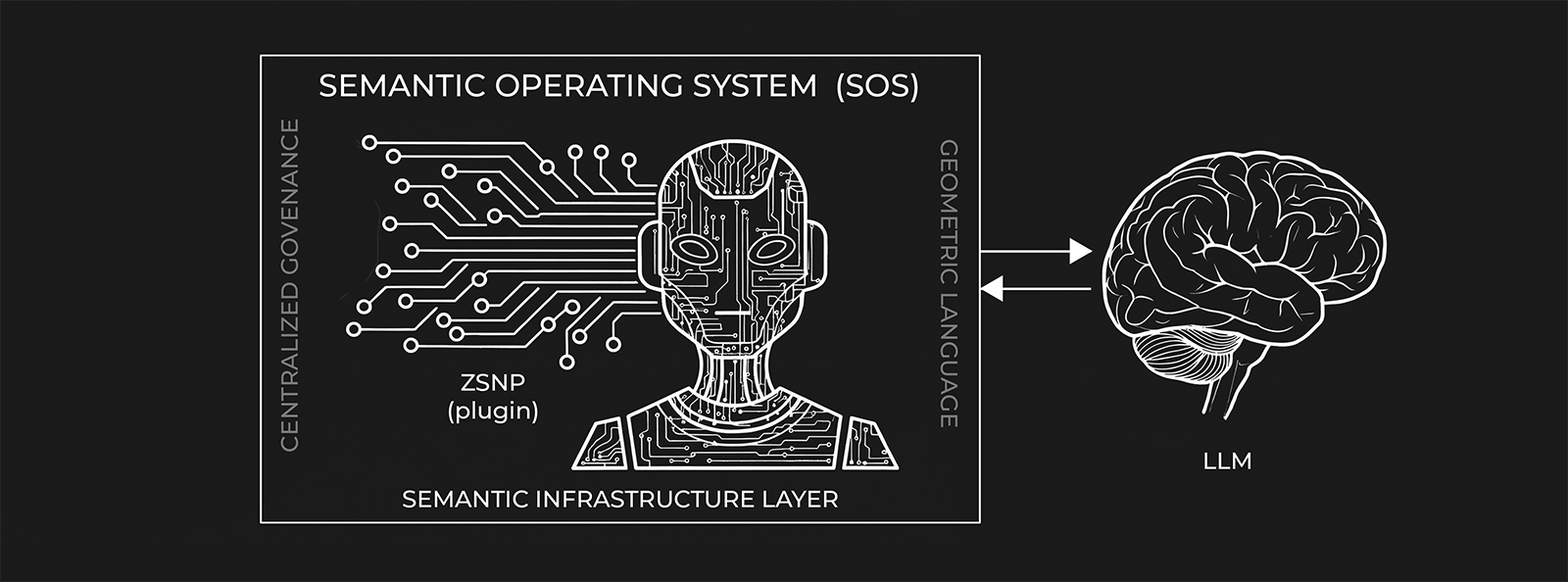
ZENCOLOR SEMANTIC OPERATING SYSTEM (SOS)
The zenColor Semantic Operating System (SOS) is the overarching framework that governs how agents perceive, interpret, and route semantic meaning. The SOS integrates the interpretation stack, routing logic, emotional modeling, and safety validation into a unified architecture that ensures consistent semantic behavior across distributed systems.
The SOS is the full protocol layer that sits above ZSNP and orchestrates the entire semantic lifecycle. It is built on the world’s shared color signal:
-
- human beings perceive color through RGB
- devices broadcast color using RGB
Color (RGB) is the universal common denominator between the physical and digital worlds. sRGB is how humans perceive color and how machines broadcast color. The zenColor SOS transforms this shared signal into a semantic structure.
The protocol consists of three core components:
-
- zenColor Nesting Cube & Dual SLM
- zenColor Semantic Normalization Protocol (ZSNP)
- Delta Z (∆Z)
Together, they convert color into geometric meaning.
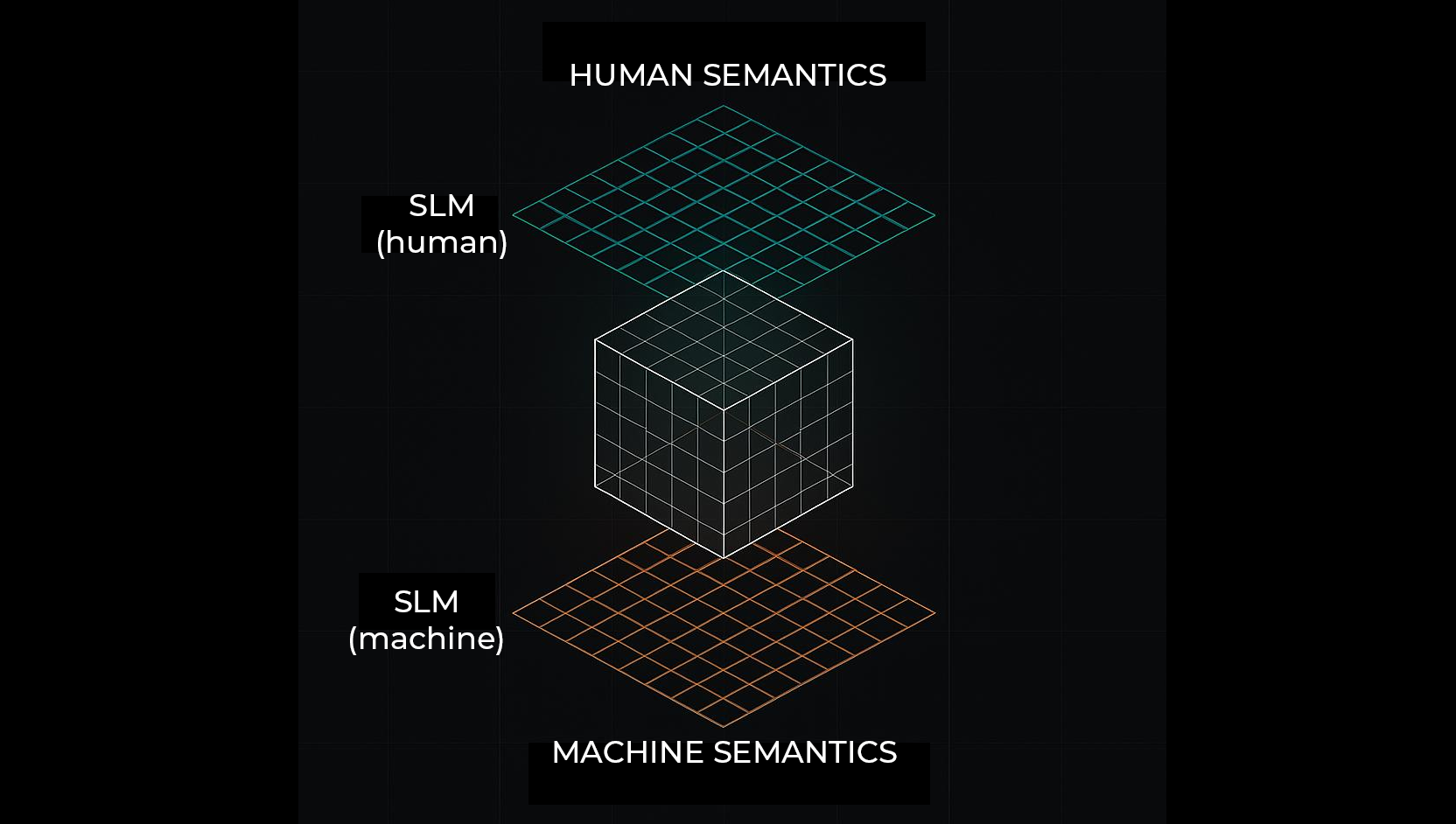
ZENCOLOR NESTING CUBE & DUAL SLM
The zenColor Nesting Cube provides a structural framework that organizes normalized RGB into a stable, navigable space for semantic interpretation. The Dual SLM (Dual Semantic Layering Model) provides a two layer system (ZCC + ZAC) that converts normalized color into semantic meaning.
The protocol level architecture that defines how meaning is structured, layered, and transmitted within ZSNP. SLM establishes the semantic infrastructure that ZCC and ZAC operate within, enabling consistent interpretation of structured and unstructured data.
The Nesting Cube is the mathematical foundation of the protocol. It provides the structural environment that makes semantic language possible.
-
- Storage — a normalized repository for all color data
- Navigation — a structured way to move through color space
- Organization — a consistent, device-agnostic architecture
Key properties:
-
- Built on normalized sRGB
- Divides color space into precise, navigable units
- Supports bidirectional flow between perception and meaning
- Anchors semantic interpretation to a stable mathematical structure
The Nesting Cube is the Rosetta Stone of the protocol — the bridge between raw color data and semantic expression.
zenColor Cube & Code (ZCC): Normalization Layer
ZCC ensures that color data is consistent across devices, displays, and environments. It uses nRGB to normalize color values into a stable, cross platform format.
ZCC provides:
-
- Device-agnostic normalization
- Cross platform consistency
- A unified baseline for semantic interpretation
ZCC is the kernel of the protocol — the backbone that ensures every color begins from a consistent starting point.
zenColor Analytics Cube & Code (ZAC): Filtering Layer
ZAC transforms normalized color into semantic structure. It uses fRGB to filter color through emotional, contextual, and perceptual dimensions.
ZAC provides:
-
- Semantic filtering
- Emotional resonance mapping
- Contextual interpretation
- Anchor based meaning extraction
ZAC is where color begins to take on meaning — the first step from representation to communication.
Dual Semantic Layering Model (SLM): Grammar & Vocabulary
The Dual SLM is the semantic engine of the protocol. It emerges when ZCC and ZAC are mapped into ZCC Codes and ZAC Codes.
These codes form the grammar (structure) and vocabulary (meaning) of color.
Dual SLM enables:
-
- Expression
- Communication
- Personalization
- Emotional interpretation
- Predictive intelligence
This is the layer that transforms color from a coordinate into a language.
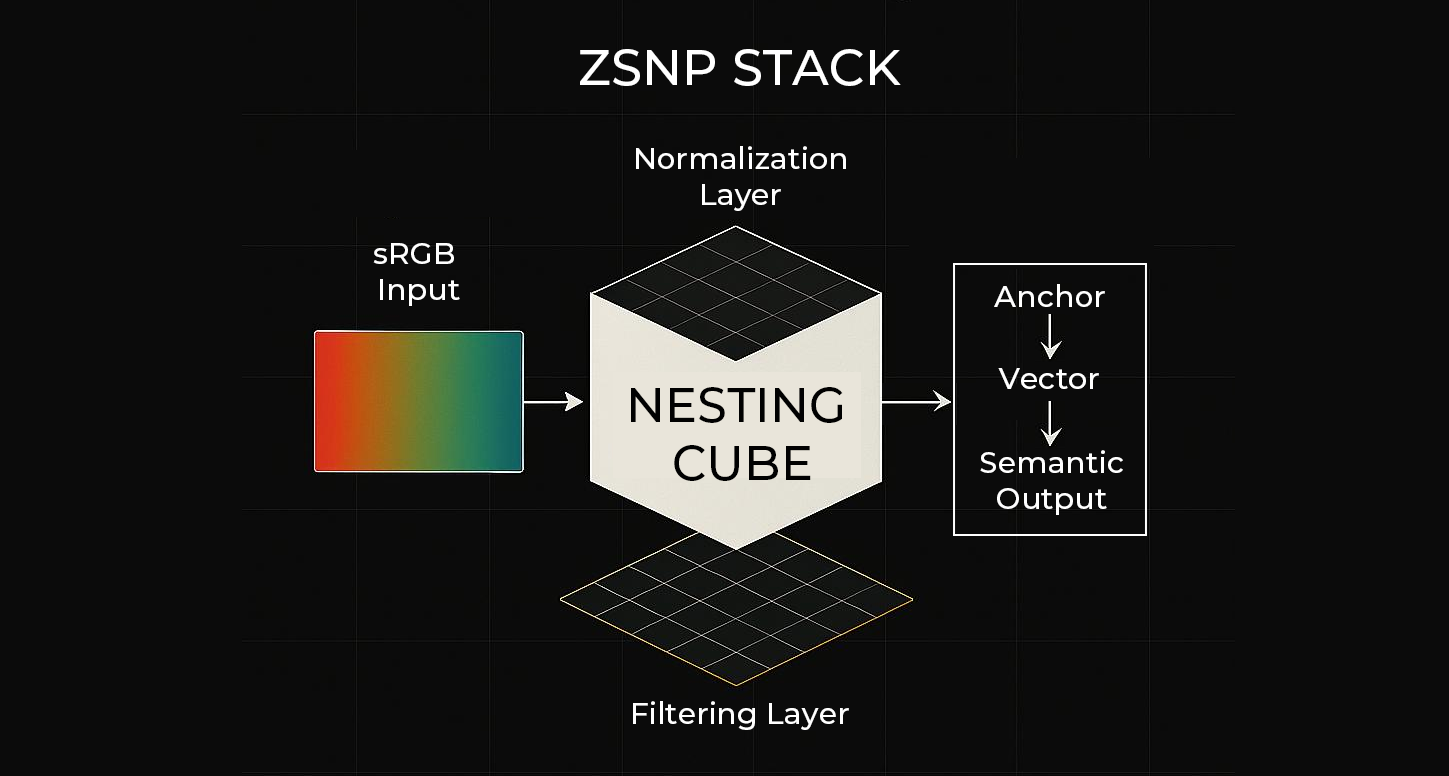
ZENCOLOR SEMANTIC NORMALIZATION PROTOCOL (ZSNP)
The foundational layer of the zenColor Semantic Perception Architecture (SPA). ZSNP defines how raw RGB input is normalized, structured, and prepared for semantic interpretation. It establishes the mathematical rules, perceptual alignment, and routing primitives that allow color to move from visual data into semantic meaning.
Color has historically been treated as a visual coordinate — a way to represent appearance, match swatches, and standardize display output. These systems describe what color looks like, but they do not communicate what color means.
ZSNP transforms RGB from a visual coordinate into a semantic language shared by humans and machines. Built on the universal RGB signal used by both human perception and digital devices, ZSNP provides the layers required to convert raw color data into meaning.
-
- Normalization of raw RGB
- Perceptual alignment across devices
- Structural organization for semantic processing
- Routing rules for interpretation and expression
ZSNP is the foundation of the zenColor Protocol — enabling AI to interpret color with human level nuance, emotional intelligence, and contextual understanding. It defines how color is normalized, filtered, structured, and expressed — enabling AI to interpret color with human level nuance, emotional intelligence, and contextual understanding.
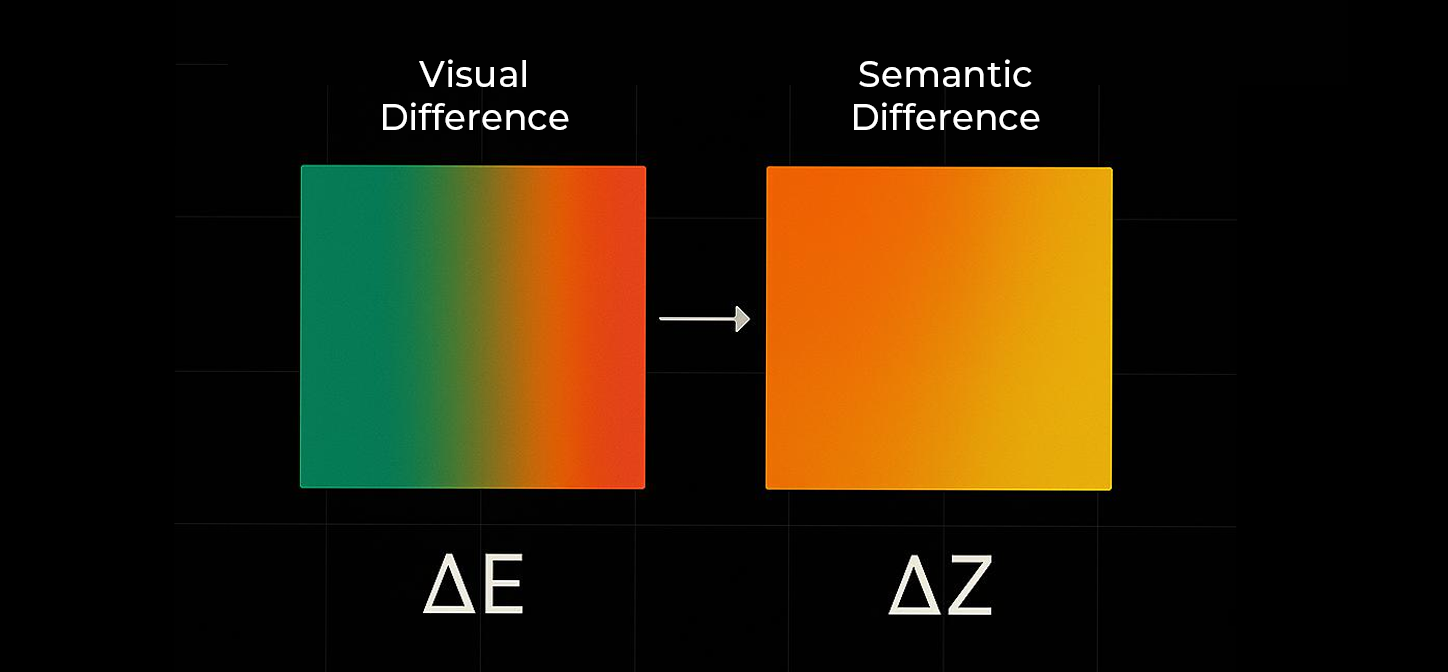
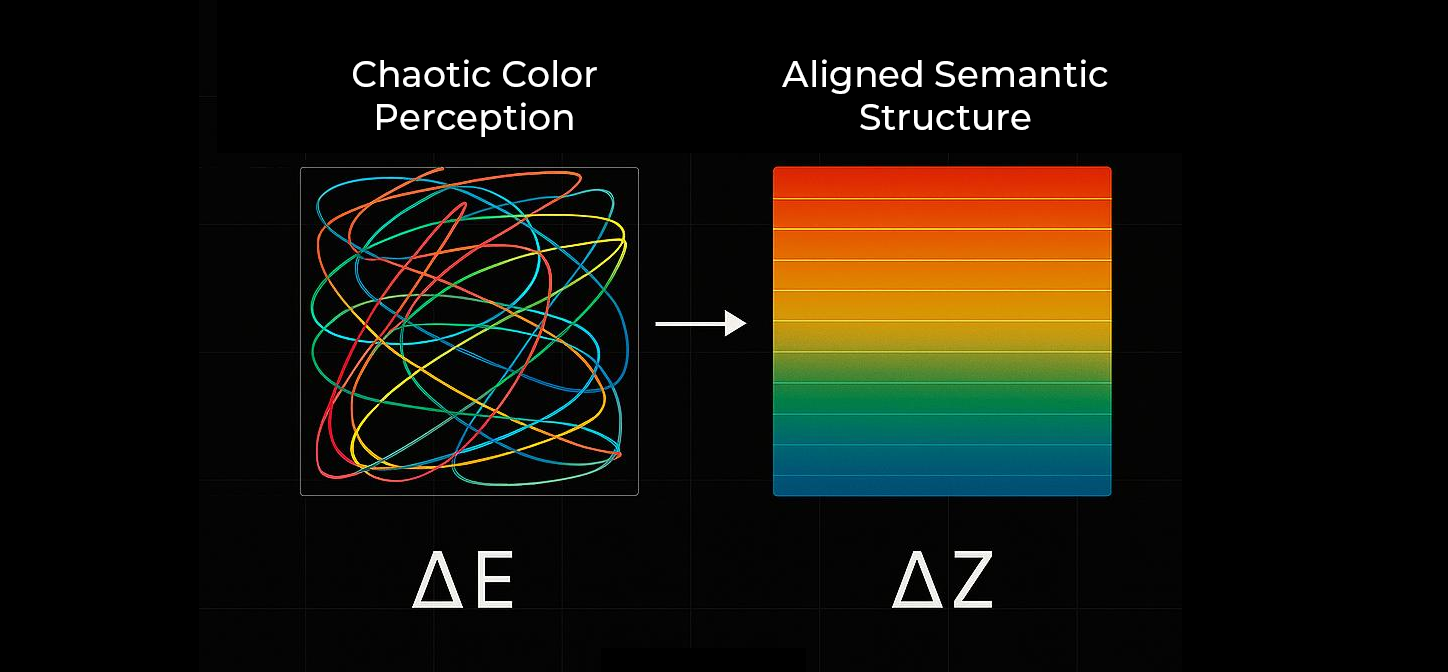
Delta Z (∆Z): The Semantic Difference Metric
Delta Z is the metric that measures semantic difference — how far two colors are in meaning, not appearance.
-
- Delta E = appearance
- Delta Z = meaning
Delta Z allows AI to understand color the way humans do: emotionally, contextually, and personally.
How Delta Z Works
Delta Z is computed through three core elements of the protocol:
1. Semantic Anchors
Stable human perception reference points that ground meaning.
They define:
-
- emotional tone
- contextual resonance
- personal significance
- longterm semantic drift
Anchors ensure Delta Z reflects real human perception, not abstract math.
2. Semantic Vectors
Directional meaning paths generated from Anchor relationships.
They map how meaning moves through color space, enabling:
-
- personalization
- emotional interpretation
- contextual adaptation
Semantic Vectors turn color into a navigable semantic landscape.
3. Bidirectional Flow
A continuous loop that updates meaning in real time:
sRGB input <–> Nesting Cube <–> Normalization Layer (ZCC) <–> Filtering Layer (ZAC) <–> Semantic Anchor <–> Semantic Vector <–> Interpretation Loop
This dynamic flow enables:
-
- realtime reinterpretation
- adaptive personalization
- semantic drift modeling
- continuous learning
Meaning evolves with the user, the context, and the system.
What Delta Z Enables
-
- AI personalization
- Emotional intelligence
- Semantic search
- eCommerce product-to-image alignment
- Predictive modeling
Delta Z is the missing metric that makes semantic color computation possible.
Why the SPA Matters
A Language Layer for the Next Era of AI
The zenColor Protocol provides:
-
- a universal semantic backbone
- a bridge between physical perception and digital intelligence
- a stable architecture built on global RGB standards
- a foundation for personalization, prediction, and emotional intelligence
Because it is anchored to human perception and the global RGB broadcast standard, the protocol is designed to last 100+ years.
zenColor is not a product.
It is a protocol — a new language layer for the future of AI.